Product Specifications
- Model / Series
- SCC-60A
- Product Dimensions
- 270 × 235 × 100 mm
- Controller Type
- MPPT
- System Voltages
- 12 / 24 / 48 / 60 / 72 / 96 V DC (menu setting)
- Rated Charge Current
- 60 A
- Current Filter Band
- 41A-60A
- Maximum PV Open-Circuit Voltage
- 210 V DC (250 V DC Max.; confirm array limits)
- Supported Battery Types
- Lead-acid and lithium; configure charging profile
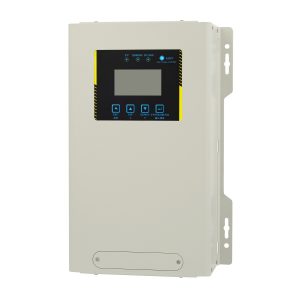
SCC-60A is a 60 A MPPT solar charge controller with a 3-phase interleaved buck topology, LCD parameter settings and a 270 × 235 × 100 mm enclosure. Its net weight is 4.1 kg. Match the PV array and battery charging profile before installation.
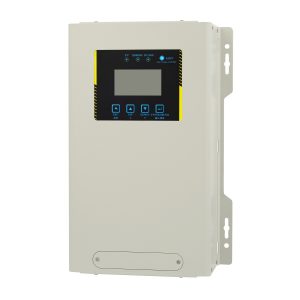
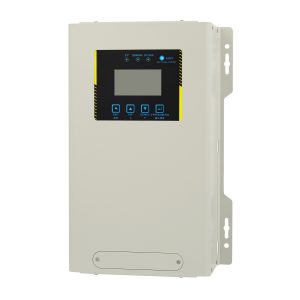
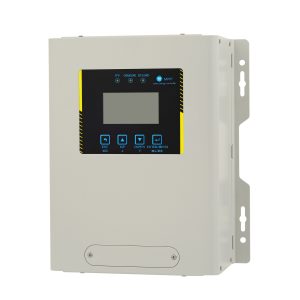
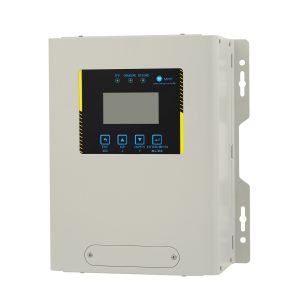
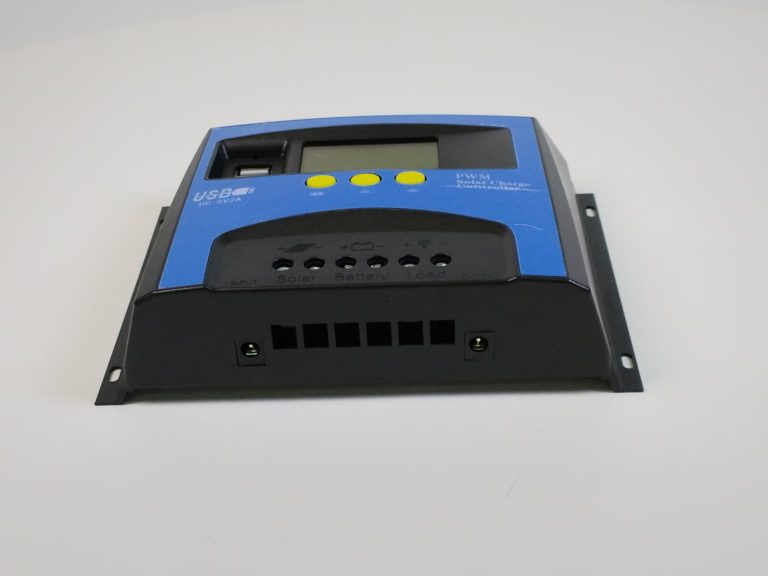
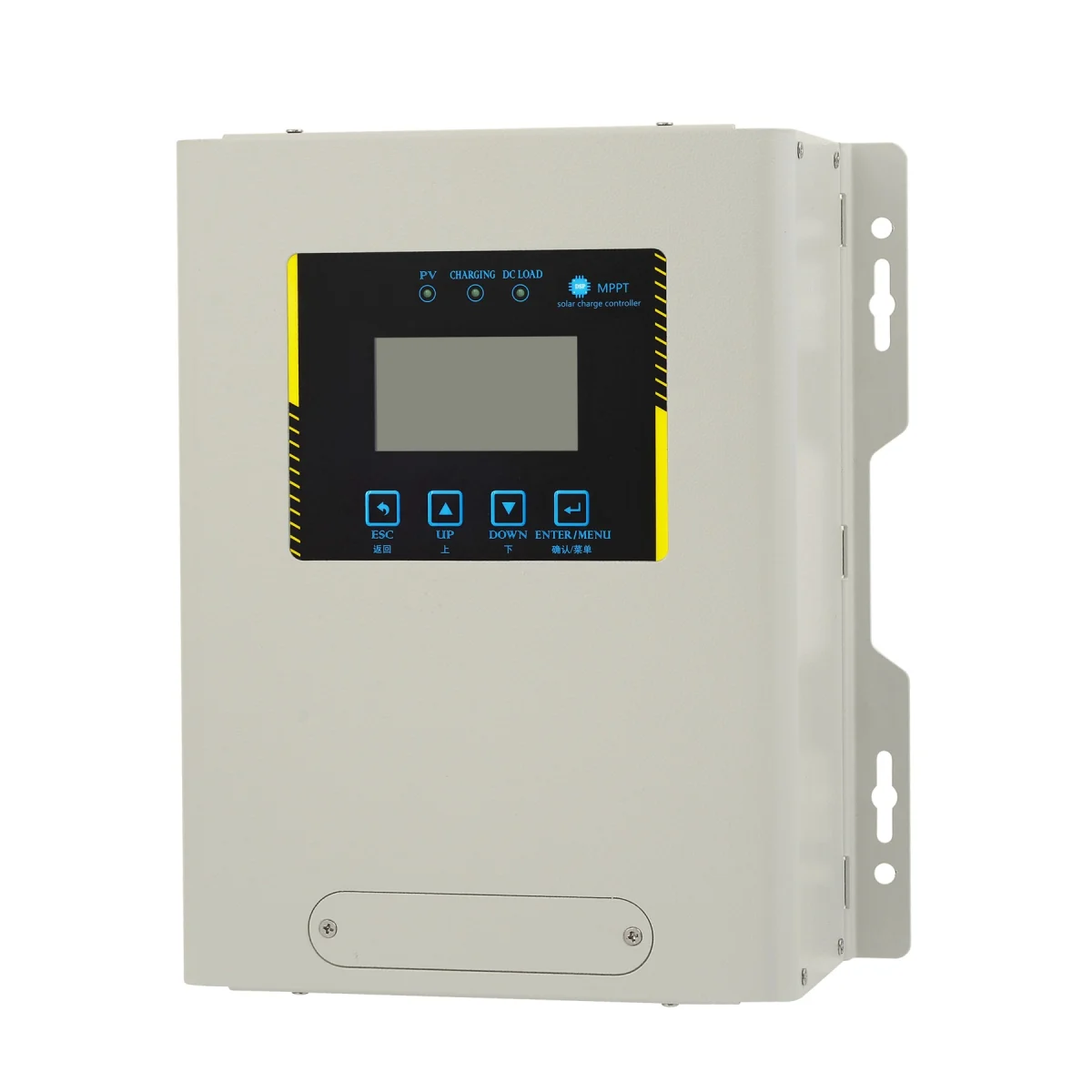
Photos illustrate the SCC-40A/60A/80A enclosure family using the supplier 80A sample. The specifications below apply to SCC-60A. Confirm the supplied nameplate, communication interface and configuration with your order.
Key Features
- 60 A rated charging current
- 3-phase interleaved buck topology
- LCD with configurable charging parameters
- Current-limiting charging mode and lithium-battery activation listed
- External temperature-probe support; confirm accessory configuration
Technical Specifications
| Model | SCC-60A |
|---|---|
| Controller type | MPPT |
| Rated charging current | 60 A |
| Circuit topology | 3-phase interleaved buck |
| Battery voltage settings | 12 / 24 / 48 / 60 / 72 / 96 V DC; menu setting |
| Catalog solar input voltage | 210 V DC (250 V DC Max.); confirm model-specific PV limits |
| Battery types | Lead-acid and lithium; configure charging parameters for the battery |
| Display | LCD operating data and parameter settings |
| Communication | Modbus, Bluetooth applet and BMS communication listed; confirm interface and protocol compatibility |
| Data history | Up to one year, as listed in the catalog |
| Dimensions | 270 × 235 × 100 mm |
| Net weight | 4.1 kg |
| Protection | Battery/PV reverse polarity, PV short circuit, charging overcurrent and TVS surge protection |
Applications
For PV-to-battery charging in off-grid and battery-based solar installations. Select charging current around the array design and battery charge limits. This controller does not provide AC inverter output.
Battery & PV Compatibility
The catalog lists menu-configurable battery voltages. Confirm supported detection behavior and set the correct charging profile; do not assume every battery is automatically recognized. The stated PV figure is not a complete MPPT operating range. Check array open-circuit voltage at the lowest design temperature, model-specific input limits and allowable array power before wiring.
Ordering Information
Send the model, quantity, PV module data, series/parallel arrangement, battery voltage and chemistry, BMS details and destination. Request model-specific documentation and confirmation of interfaces, accessories, branding, price, lead time and warranty terms.
FAQ
How does SCC-60A compare with the other compact SCC models?
SCC-40A, SCC-60A and SCC-80A share the 270 × 235 × 100 mm enclosure. Their rated currents are 40 A, 60 A and 80 A, with net weights of 3.9 kg, 4.1 kg and 4.3 kg. SCC-60A uses a 3-phase topology and is rated at 60 A; choose by battery and array requirements.
Can any PV array below 250 V be connected?
No. The catalog states 210 V DC (250 V DC Max.), without a complete operating-range table here. Confirm voltage, temperature margin and array-power limits using the supplied model documentation.
Does BMS communication work with every lithium battery?
Universal compatibility is not claimed. Confirm the physical interface, supported protocol and charging settings for the specific battery.
Are a phone connection and temperature probe included?
The catalog lists Bluetooth applet control and external temperature-probe support. Confirm supplied accessories and setup requirements with the quotation.
Is this an inverter or AC battery charger?
It is an MPPT solar charge controller for PV-to-battery charging. A separately matched inverter is needed for battery-to-AC output.
Related Products
Compare SCC-40A, SCC-60A and SCC-80A for charging-current and topology differences. Inverter selection is a separate step requiring compatible battery voltage and load capacity.
Topic-linked resources
Related content for this product
Explore compatible applications, technical guidance and supporting resources.